Freshwater Species Guide
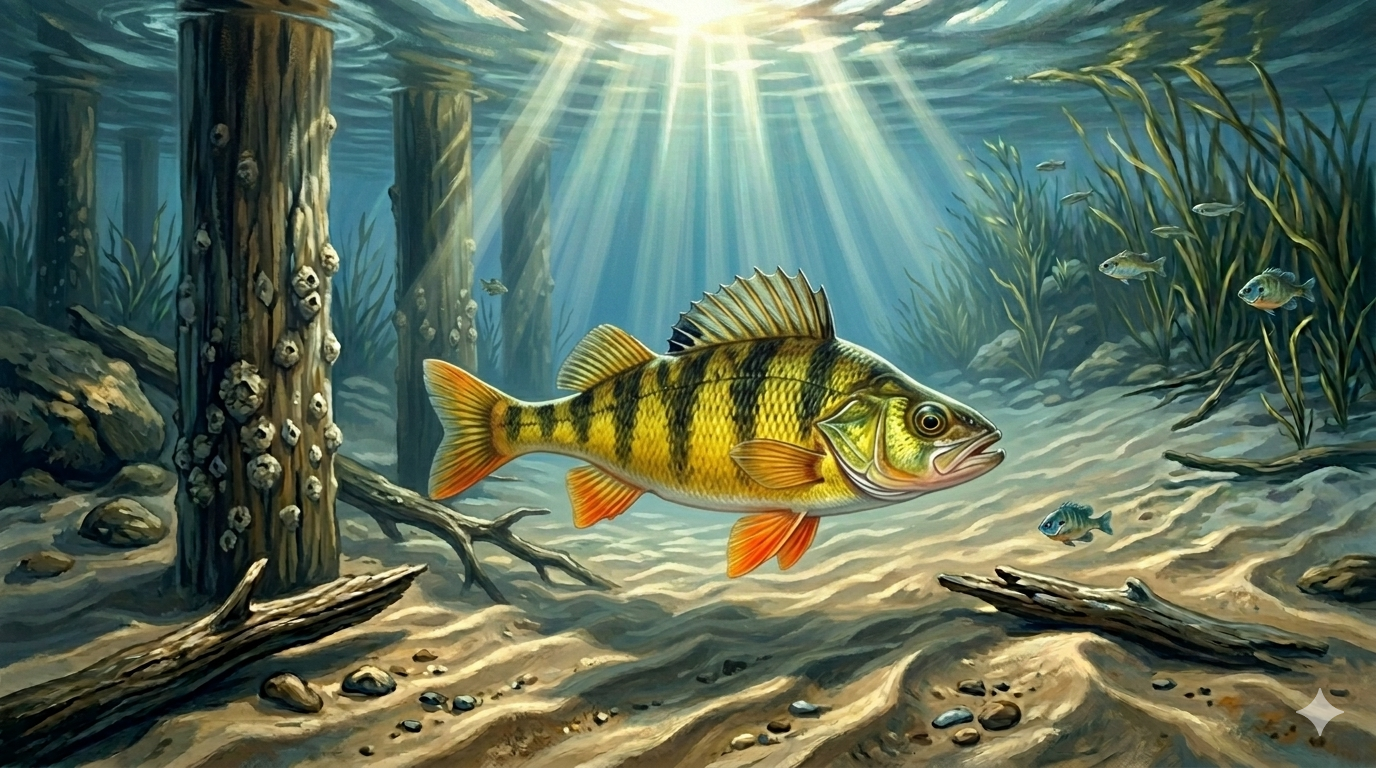
Yellow Perch
Perca flavescens · Percidae (Perch family)
At a Glance
Ideal Temp
45–70°F
Typical Weight
0.25–1 lb
Record Weight
4 lbs 3 oz
Average Length
6–12 inches
Lifespan
9–11 years
Peak Activity
Midday (ice) / Morning (open water)
Skill Level
Beginner
Overview
Yellow perch are the MVP of ice fishing. Sweet, firm, white meat that gives walleye a run for its money — and they travel in massive schools, which means when you find them, you can catch a meal fast. In open water they're schooling fish on structure; on ice they're arguably the #1 target species in the northern states and Canada.
Habitat
Rocky and gravel bottoms, weed edges, offshore humps. Deep basins in summer, suspended over structure in fall, and concentrated in basins under ice.
Feeding Behavior
Small minnows, insects, small crustaceans. School feeders — when one bites, drop back in the same spot. Works in a column of water — vertical presentations excel.
Spawning
Early spring spawner — water 44–54°F. Drape ribbon-like egg masses over submerged vegetation and woody structure. No parental care.
Seasonal Patterns
Spring
Post-spawn schools moving to rocky structure. Active in morning light.
Summer
Deep in midday. Active on structure points and humps at dawn.
Fall
Stacking up in large schools pre-winter. Fast action.
Winter
Peak ice fishing season. Schools dense and aggressive.
Top Lures for Yellow Perch
Best Techniques
Pro Tips
Locate the school depth precisely — they suspend in a tight band. Find that depth and stay there.
When jigging for perch, the first few fish show you the exact depth. Mark it.
Did You Know
Yellow perch are one of the most economically important sport fish in the Great Lakes region. Perch fishing tournaments draw thousands of anglers each winter across the ice-fishing belt.
Regulations Note
Bag limits vary widely (5–50 per day depending on state/body of water). Great Lakes perch fisheries are closely regulated. Check local rules.
Plan Your Next Trip
Get Your Yellow Perch Strike Plan
Enter your location and date — the Darkhorse Strike Plan pulls live weather, barometric pressure, and solunar data to give you exact lures and techniques for today.