Freshwater Species Guide
White Crappie
Pomoxis annularis · Centrarchidae
At a Glance
Ideal Temp
58–74°F
Typical Weight
0.5–2 lbs
Record Weight
5 lbs 3 oz
Average Length
8–12 inches
Lifespan
7–10 years
Peak Activity
Dawn / Dusk
Skill Level
Beginner
Overview
The black crappie's southern cousin — and in stained or murky water, the better fish to target. White crappie tolerate lower water clarity and warmer temperatures than blacks, which means they dominate the panfish scene in southern reservoirs, river impoundments, and turbid Midwest lakes. The spring spawn pushes slabs into the shallows where a small jig under a bobber produces some of the most fun, accessible fishing in freshwater. And the fillets? Arguably the best-tasting freshwater fish, period.
Habitat
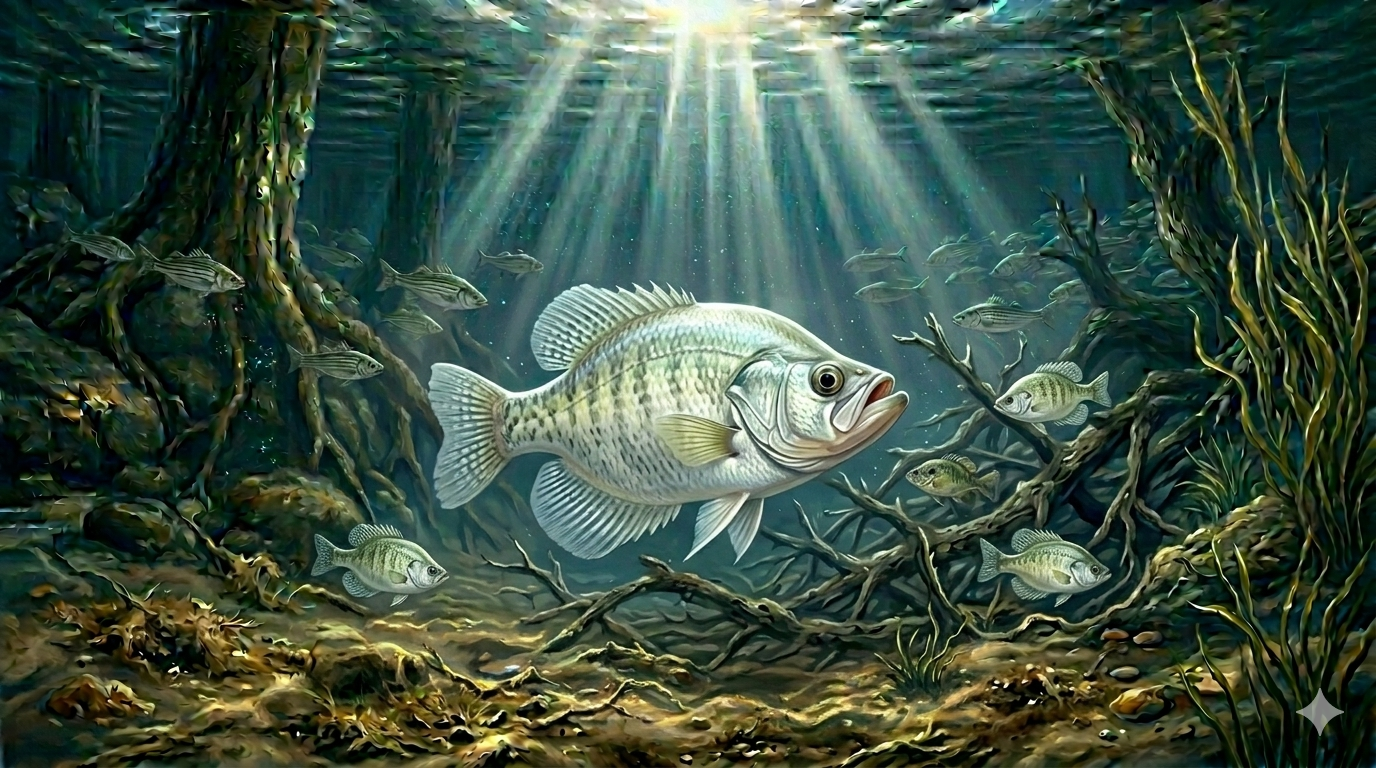
Brush piles, standing timber, dock pilings, and any vertical or overhead structure in stained water. White crappie are more tolerant of murky conditions than black crappie and thrive in turbid reservoirs and river systems. They're structure-oriented fish that school tightly around submerged brush, stake beds, and bridge pilings — find one and you'll usually find a dozen.
Feeding Behavior
Minnows and small shad make up the bulk of their diet. White crappie are ambush feeders that hang near structure and dart out to grab passing baitfish. They feed more actively at dawn, dusk, and on overcast days when light levels are low. A slow-falling jig or live minnow suspended at the right depth near structure is the classic presentation.
Spawning
Spawn in spring when water reaches 56–68°F, typically March–May depending on latitude. Males build nests in 2–6 feet of water near brush, logs, or rocks. The spring spawn concentrates enormous numbers of fish in predictable shallow areas and produces the most reliable crappie fishing of the year — this is when beginners should target crappie.
Seasonal Patterns
Spring
Spawning season. Fish push into shallow brush and structure in massive numbers. Best fishing of the year.
Summer
School deep around submerged brush and standing timber. Early morning and evening bites best.
Fall
Following shad migrations toward creek arms and points. Schooling activity picks up significantly.
Winter
Grouped deep on standing timber and main-lake brush piles. Slow but catchable with precise vertical presentations.
Top Lures for White Crappie
Best Techniques
Pro Tips
Find the brush, find the crappie. If your lake has planted brush piles (many southern reservoirs do), get GPS coordinates from the state fisheries agency. That's your starting point.
Depth is everything — if you're catching fish at 14 feet, every crappie in that school is at 14 feet. Use a slip bobber set to the exact depth and adjust in 6-inch increments.
In stained water, chartreuse and white jigs outperform natural colors by a wide margin. The fish are hunting by vibration and contrast, not by realism.
Spider rigging (multiple long poles fanned out from the front of a slow-moving boat) is the most efficient way to locate and catch crappie in southern reservoirs. It covers water methodically.
Did You Know
White crappie can be distinguished from black crappie by counting the dorsal spines — whites have 5–6, blacks have 7–8. White crappie also tend to have more prominent vertical bars on their sides, while blacks display a more random spot pattern.
Regulations Note
Same as black crappie in most states. Check minimum size — often 9–10 inches.
Plan Your Next Trip
Get Your White Crappie Strike Plan
Enter your location and date — the Darkhorse Strike Plan pulls live weather, barometric pressure, and solunar data to give you exact lures and techniques for today.