Freshwater Species Guide
Warmouth
Lepomis gulosus · Centrarchidae
At a Glance
Ideal Temp
65–80°F
Typical Weight
0.25–1 lb
Record Weight
2 lbs 7 oz
Average Length
5–9 inches
Lifespan
8 years
Peak Activity
Morning
Skill Level
Beginner
Overview
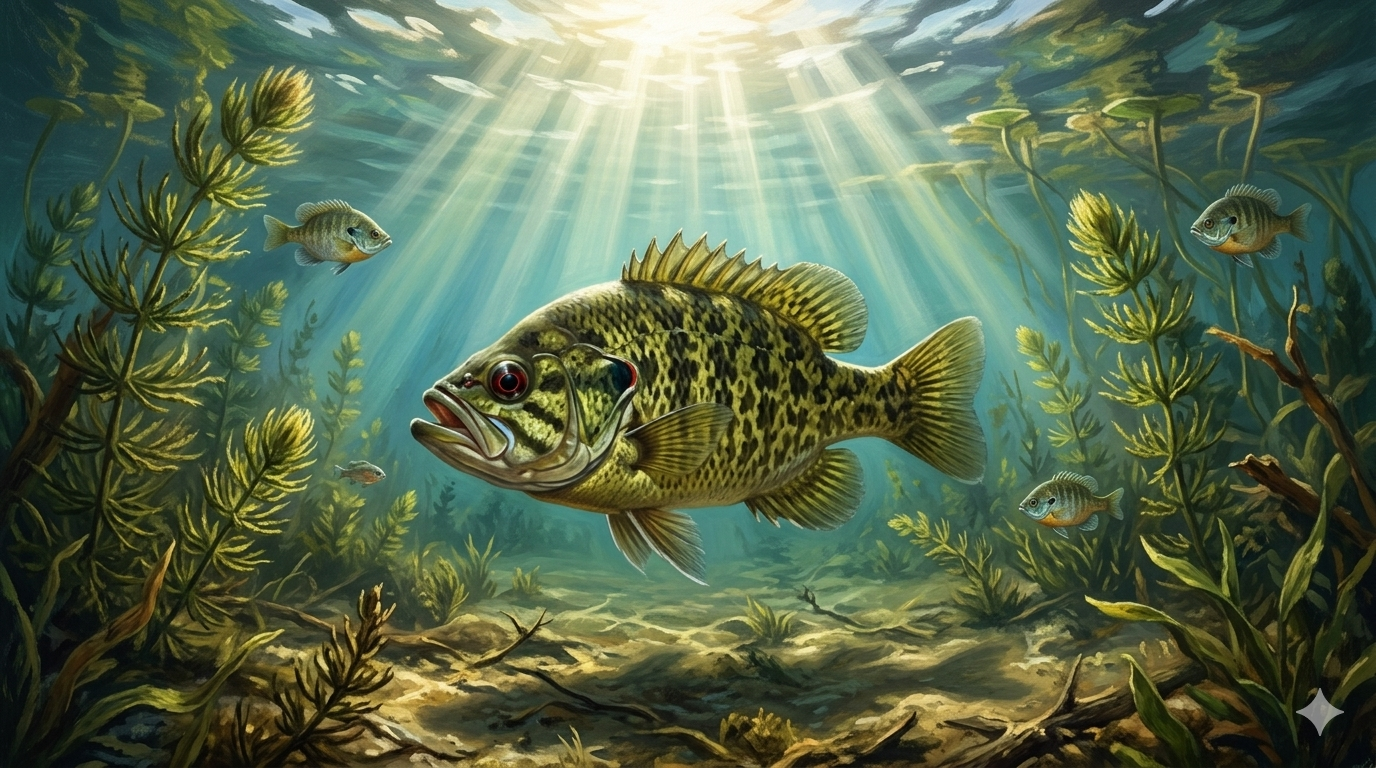
The tough guy of the sunfish family. Warmouth look like they've been in a bar fight — thick body, big red-orange eyes, and a mouth noticeably larger than most sunfish. They inhabit the murkiest, most tangled swamp habitat that other sunfish avoid. If you're pulling a jig through cypress stumps in a Louisiana bayou and something slams it with surprising aggression for its size, you've probably got a warmouth.
Habitat
Muddy ponds, swampy backwaters, slow creeks with heavy timber, and bayous. Warmouth thrive in murky, low-oxygen water that stresses most other sunfish. They're structure-oriented and tuck into root tangles, cypress knees, and submerged logs. Found primarily in the southeastern US from Florida to Texas and up the Mississippi River drainage.
Feeding Behavior
More predatory than other sunfish. Warmouth eat crawfish, small fish, aquatic insects, and anything else they can fit in their oversized mouths. They ambush prey from cover rather than actively cruising — behavior more reminiscent of bass than panfish. This predatory streak makes them surprisingly responsive to small crankbaits and jigs.
Spawning
Spawn in late spring and early summer when water reaches 70–75°F. Males build nests in soft mud or debris near cover — unlike bluegill that prefer clean sand. Males guard nests aggressively. Warmouth will readily hybridize with bluegill and other sunfish in shared waters.
Seasonal Patterns
Spring
Moving to spawning areas near heavy cover. Aggressive on small jigs and worms.
Summer
Peak activity. Hiding in heavy cover — cypress roots, fallen timber, thick vegetation.
Fall
Still active near cover as water cools. Less aggressive than summer.
Winter
Slow and deep. Tucked into the densest cover available.
Top Lures for Warmouth
Best Techniques
Pro Tips
Fish the nastiest, most tangled cover you can find — warmouth live where other anglers won't cast. Cypress knees, root balls, and flooded timber are prime spots.
Use a slightly larger hook than you'd use for bluegill — warmouth have big mouths for a sunfish and will eat a #4 or #6 hook presentation comfortably.
Warmouth hit harder than bluegill and fight dirty — they immediately dive for structure. Light drag and quick hooksets keep them from burying you in cover.
Did You Know
Warmouth have the largest mouth relative to body size of any North American sunfish. They're also one of the few sunfish species that will readily eat small fish and crawfish, making them more predatory than their panfish cousins.
Regulations Note
No specific regulations in most states. Often grouped with other sunfish.
Plan Your Next Trip
Get Your Warmouth Strike Plan
Enter your location and date — the Darkhorse Strike Plan pulls live weather, barometric pressure, and solunar data to give you exact lures and techniques for today.