Freshwater Species Guide
Walleye
Sander vitreus · Percidae (Perch family)
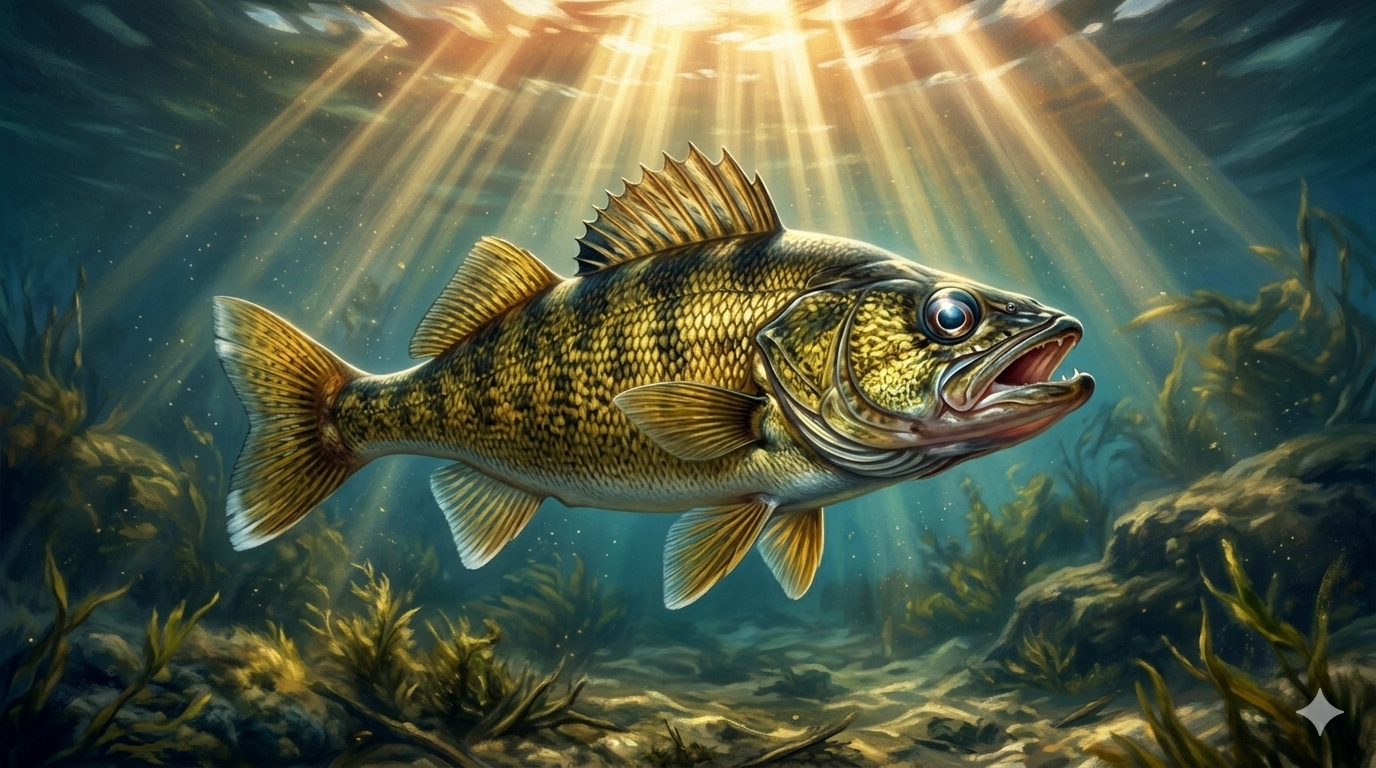
At a Glance
Ideal Temp
50–70°F
Typical Weight
1–5 lbs
Record Weight
25 lbs
Average Length
14–20 inches
Lifespan
10–20 years
Peak Activity
Night / Low Light
Skill Level
Intermediate
Overview
Ask any Midwestern angler what the best eating freshwater fish is and they'll say walleye without blinking. Sweet, flaky white meat that fries up perfect — walleye are the holy grail of the dinner table. They're also light-sensitive and largely nocturnal, which is why most serious walleye anglers fish after sunset.
Habitat
Deep structure in lakes — main lake points, rock humps, gravel transitions. In rivers they hold in current seams, tailwaters below dams, and deep pools. Their reflective eyes (tapetum lucidum) are built for low-light conditions.
Feeding Behavior
Primarily minnows and perch. Heavily influenced by light conditions — feeding peaks at dusk, dawn, and overcast days. Their glassy eyes give them a serious advantage over prey in low light.
Spawning
Earliest spawner of major sport fish — water temp 34–44°F, typically March–April. Spawn at night in rocky shallows and tributaries. No nest building.
Seasonal Patterns
Spring
Post-spawn feeding in shallows at night. Most catchable of the year.
Summer
Deep during day. Active over humps and structure at night.
Fall
Feeding aggressively before winter. Moving to shallower structure.
Winter
Still feeding — walleye are one of the best ice fishing targets.
Top Lures for Walleye
Best Techniques
Pro Tips
Fish in the dark. Seriously. The best walleye bite of the year happens after 10pm in summer.
Match your jig color to the forage — white/chartreuse for shad, olive/brown for perch.
Slow down more than you think you need to. Walleye will follow a jig for 10 feet and reject it if it moves too fast.
Did You Know
Walleye have a layer of reflective tissue behind their retinas that acts like a mirror — this is what causes their eyes to glow in photos, and it's why they feed so well in near-total darkness.
Regulations Note
Heavily regulated in most states. Minimum size typically 15–18 inches. Daily bag limits common. Check state DNR carefully.
Plan Your Next Trip
Get Your Walleye Strike Plan
Enter your location and date — the Darkhorse Strike Plan pulls live weather, barometric pressure, and solunar data to give you exact lures and techniques for today.