Freshwater Species Guide
Steelhead
Oncorhynchus mykiss · Salmonidae
At a Glance
Ideal Temp
38–52°F
Typical Weight
5–15 lbs
Record Weight
42 lbs 2 oz
Average Length
24–36 inches
Lifespan
4–9 years
Peak Activity
Morning
Skill Level
Advanced
Overview
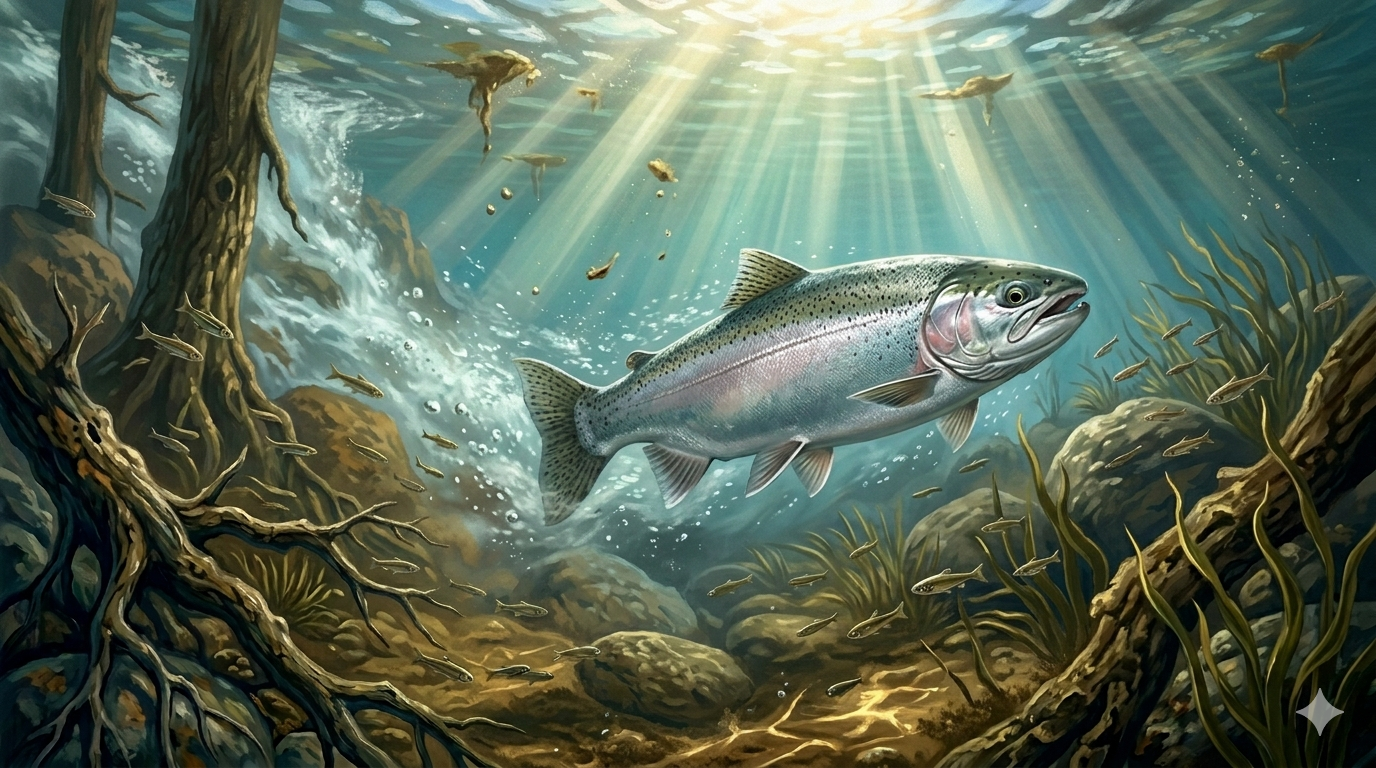
A steelhead is a rainbow trout that chose violence. Same species, completely different animal. After years of ocean feeding, these fish return to rivers as chrome-bright, powerful torpedoes that jump, peel drag, and test every piece of gear you own. Landing a winter steelhead in a rainy Pacific Northwest river is one of the peak experiences in all of fishing — and the reason people stand in freezing water for hours waiting for a single bite.
Habitat
Rivers and tributaries with access to the Pacific Ocean or Great Lakes. Steelhead need clean gravel for spawning and cold, well-oxygenated water. In the Pacific Northwest, they ascend coastal rivers from California to Alaska. In the Great Lakes, they run tributaries from New York to Wisconsin. They hold in deep runs, tailouts, and behind large boulders.
Feeding Behavior
In the ocean or Great Lakes, steelhead feed aggressively on baitfish, shrimp, and squid, packing on weight rapidly. Once they enter rivers to spawn, feeding slows dramatically — they strike out of aggression, instinct, and territorial behavior rather than hunger. This is why bright, provocative presentations work even though the fish aren't actively feeding.
Spawning
Spawn in spring (March–May) in clean gravel tributaries. Winter-run steelhead enter rivers November–March but don't spawn until spring. Summer-run fish enter June–October and hold in deep pools through fall and winter before spawning. Unlike Pacific salmon, steelhead can survive spawning and return to the ocean or lake to repeat the cycle.
Seasonal Patterns
Spring
Active spawning. Fish on redds and staging in tailouts. Most aggressive biting of the year.
Summer
Summer-run fish entering rivers. Hold in deep, cool pools. Dawn and dusk activity.
Fall
Late summer-run fish settling in. Early winter-run fish arriving on first rains. Scattered throughout rivers.
Winter
Winter-run peak. Fresh chrome fish entering on every rain. Cold water = slow presentations required.
Top Lures for Steelhead
Best Techniques
Pro Tips
Fresh fish are everything. After a rain event raises river levels, fresh chrome steelhead push in from the ocean or lake. Fish the first dropping water after a rain for the highest concentration of aggressive new arrivals.
Float and jig is the most effective all-around steelhead technique. A 1/4 oz jig under a slip float, drifted through runs at the speed of current, covers water efficiently and presents naturally.
Match your egg sac size to the water clarity — larger, brighter sacs in stained water, smaller and more natural in clear conditions. Pink and peach are the all-time standards.
Steelhead follow current seams. Read the water — find where fast and slow water meet, and drift your presentation right along that seam repeatedly.
Did You Know
Steelhead and rainbow trout are genetically identical — the same species, Oncorhynchus mykiss. The only difference is life history: rainbows stay in freshwater, steelhead migrate to salt water or the Great Lakes. A rainbow trout given ocean access will become a steelhead.
Regulations Note
Heavily regulated. Season, gear, and bag limits vary by river. Many rivers are catch-and-release only for wild steelhead.
Plan Your Next Trip
Get Your Steelhead Strike Plan
Enter your location and date — the Darkhorse Strike Plan pulls live weather, barometric pressure, and solunar data to give you exact lures and techniques for today.