Freshwater Species Guide
Northern Snakehead
Channa argus · Channidae
At a Glance
Ideal Temp
65–80°F
Typical Weight
2–8 lbs
Record Weight
19 lbs 9 oz
Average Length
16–28 inches
Lifespan
8–10 years
Peak Activity
Morning
Skill Level
Intermediate
Overview
The fish that made national headlines as an invasive "Frankenfish" — and then quietly became one of the most exciting sport fish in the mid-Atlantic. Northern snakeheads fight like demons, hit topwater lures explosively, inhabit heavy cover that tests your gear, and they're legal (and encouraged) to harvest everywhere they're found. The Potomac River and its tributaries have become the epicenter of snakehead fishing in North America, drawing anglers who specifically target them for the fight and the excellent table fare.
Habitat
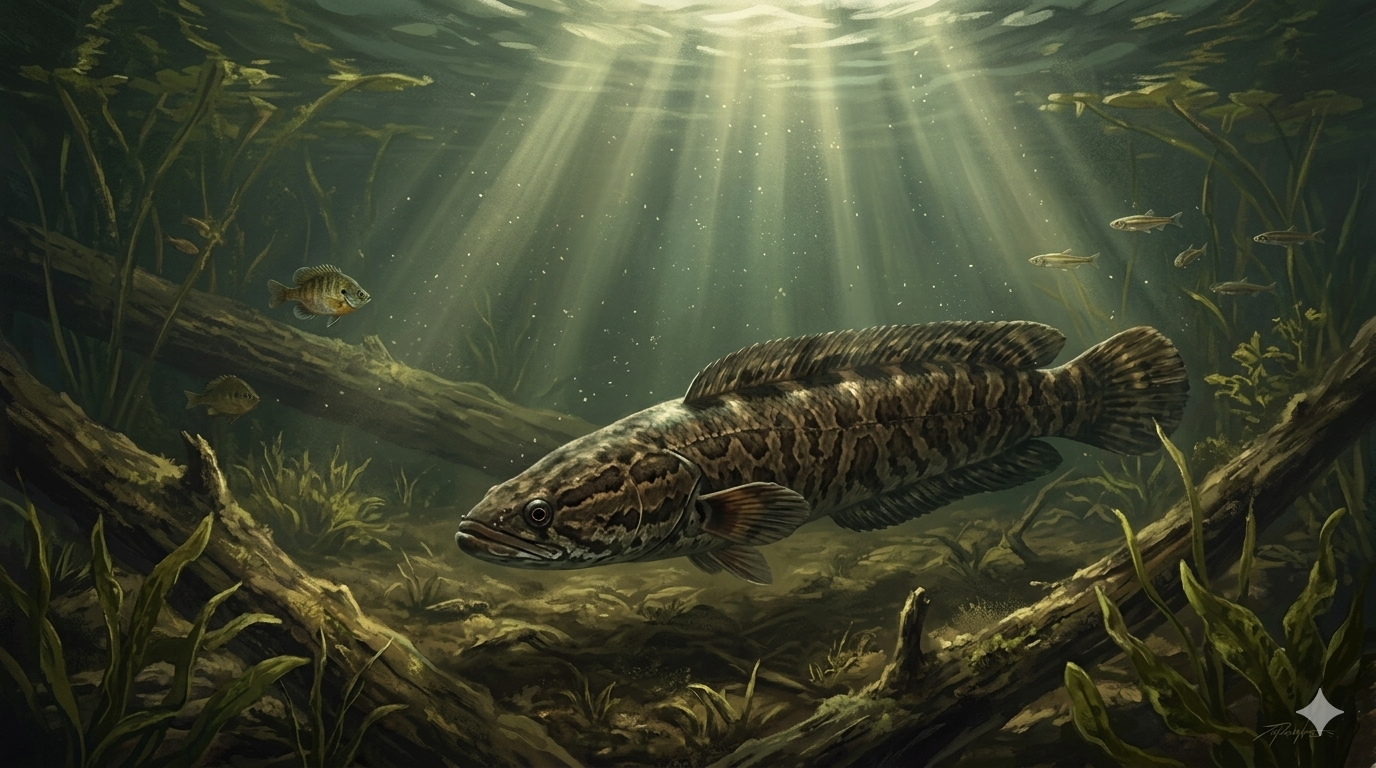
Shallow, weedy backwaters, tidal rivers, slow creeks, and vegetated ponds. Snakeheads are ambush predators that sit in heavy cover — matted vegetation, lily pads, and flooded timber. They can breathe atmospheric air, which allows them to survive in low-oxygen water that would kill most fish. Currently established in the Potomac River watershed, parts of the Delaware River, and scattered populations in other eastern states.
Feeding Behavior
Aggressive ambush predators that eat fish, frogs, crayfish, and small mammals. They hunt from cover with explosive strikes reminiscent of largemouth bass but with more raw power. Topwater frogs, buzzbaits, and swimbaits work exceptionally well. Snakeheads are willing to hit surface lures even in heavy cover, making frog fishing the premier technique.
Spawning
Spawn in summer when water temps reach 60–70°F. Both parents build a nest by clearing vegetation in shallow water and guard eggs and fry together. The parental care is extensive — both parents escort schools of fry for weeks after hatching, aggressively defending them from any perceived threat.
Seasonal Patterns
Spring
Moving to shallow spawning areas. Becoming aggressive as water warms through 60°F.
Summer
Peak season. Spawning, guarding fry, and aggressively feeding in heavy cover. Best topwater action.
Fall
Active pre-winter feeding. Still hitting topwater in early fall, transitioning to subsurface later.
Winter
Dormant in mud. Not catchable in cold water. They can survive near-freezing conditions by burrowing.
Top Lures for Northern Snakehead
Best Techniques
Pro Tips
Frog fishing is THE technique for snakeheads. Walk a hollow-body frog across matted vegetation and through openings in lily pads — the strikes are absolutely explosive.
Use heavy tackle — 50–65 lb braid and a heavy action rod. Snakeheads live in the thickest cover and you need to horse them out before they bury you in vegetation.
When a snakehead hits a frog, wait a full 2 seconds before setting the hook. They crush the bait and turn — let them commit before you swing.
Snakeheads are excellent table fare — firm, white, flaky meat with no muddy taste. Harvest is encouraged in all waters where they're established.
Did You Know
Northern snakeheads can breathe air using a primitive lung-like organ above their gills. They can survive out of water for days in moist conditions and have been documented traveling short distances across land between waterways — which is how they spread to new bodies of water.
Regulations Note
ILLEGAL to release alive in most states. Kill immediately if caught. No bag or size limits — harvest encouraged.
Plan Your Next Trip
Get Your Northern Snakehead Strike Plan
Enter your location and date — the Darkhorse Strike Plan pulls live weather, barometric pressure, and solunar data to give you exact lures and techniques for today.