Freshwater Species Guide
Redear Sunfish
Lepomis microlophus · Centrarchidae
At a Glance
Ideal Temp
65–80°F
Typical Weight
0.5–2 lbs
Record Weight
5 lbs 7 oz
Average Length
7–12 inches
Lifespan
6–8 years
Peak Activity
Midday
Skill Level
Beginner
Overview
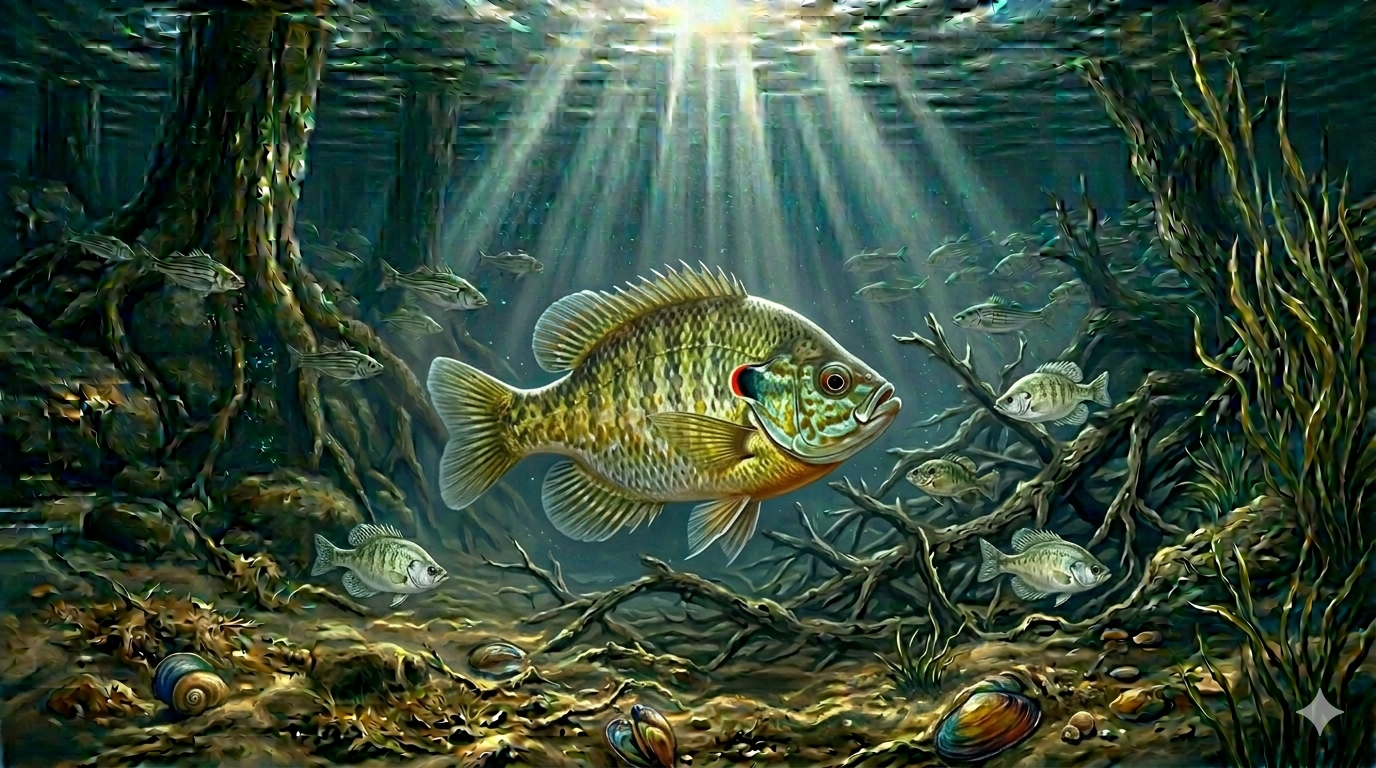
The biggest sunfish you'll ever catch, and the one serious panfish anglers get obsessed with. Redear sunfish — called "shellcrackers" because they literally crush snail shells with specialized throat teeth — grow larger than bluegill, fight harder, and inhabit deeper water. A 2-lb redear on ultralight tackle is a legitimate battle. Southern reservoirs and farm ponds produce shellcrackers that would make any bluegill envious, and they're absolutely delicious on the plate.
Habitat
Deeper, cleaner water than most sunfish. Redear prefer sandy or gravel bottoms near submerged vegetation in lakes, ponds, and reservoirs. They spend more time on the bottom than bluegill, rooting through substrate for snails and mussels. Found primarily in the Southeast but stocked widely. Look for them on deeper flats (6–15 ft) with sparse vegetation and clean bottom.
Feeding Behavior
Specialized bottom feeders. Their pharyngeal teeth crush snails, mussels, and freshwater clams — food sources that most other sunfish can't access. They also eat worms, larvae, and small crayfish. This bottom-feeding specialization means they respond best to baits presented on or near the bottom, unlike bluegill which readily take topwater presentations.
Spawning
Spawn in late spring when water reaches 68–72°F, slightly later than bluegill. Males build nests on clean sand or gravel bottoms in 3–8 feet of water, often in colonies. The bedding period concentrates large numbers of catchable fish in predictable areas and is the best time of year to target trophy-sized shellcrackers.
Seasonal Patterns
Spring
Bedding season — peak of the year. Concentrated on spawning flats. Highly aggressive when on beds.
Summer
Move to deeper structure after spawn. Bottom-feed on snails and mussels. Midday can be productive.
Fall
Active feeding before winter slowdown. Found on transition areas between shallow and deep.
Winter
Deep and inactive. Slow bottom presentations on warm afternoons may produce occasional fish.
Top Lures for Redear Sunfish
Best Techniques
Pro Tips
During the spawn, find clean sand or gravel flats in 3–8 feet of water. Shellcracker beds look like light-colored circles on the bottom. Polarized sunglasses are essential for spotting them.
Fish deeper than you would for bluegill. Redear spend most of their time on the bottom in 8–15 ft of water, and a worm presented right on the substrate will outfish a suspended presentation every time.
Live red wigglers outfish nightcrawlers for redear. Thread the entire worm on a #6 hook and fish it on the bottom with a small split shot 8 inches above the hook.
Redear don't hit surface baits like bluegill do — forget poppers and topwater flies. Bottom-oriented presentations are the key to consistent shellcracker success.
Did You Know
Redear sunfish have specialized pharyngeal teeth (throat teeth) that can crush the shells of snails, mussels, and freshwater clams. This ability to access food sources that no other sunfish can eat gives them a competitive advantage and contributes to their larger maximum size compared to bluegill.
Regulations Note
Generous bag limits in most southern states. Often grouped with other sunfish.
Plan Your Next Trip
Get Your Redear Sunfish Strike Plan
Enter your location and date — the Darkhorse Strike Plan pulls live weather, barometric pressure, and solunar data to give you exact lures and techniques for today.