Freshwater Species Guide
Pumpkinseed
Lepomis gibbosus · Centrarchidae
At a Glance
Ideal Temp
65–78°F
Typical Weight
0.1–0.5 lbs
Record Weight
1 lb 6 oz
Average Length
4–8 inches
Lifespan
8–12 years
Peak Activity
Morning
Skill Level
Beginner
Overview
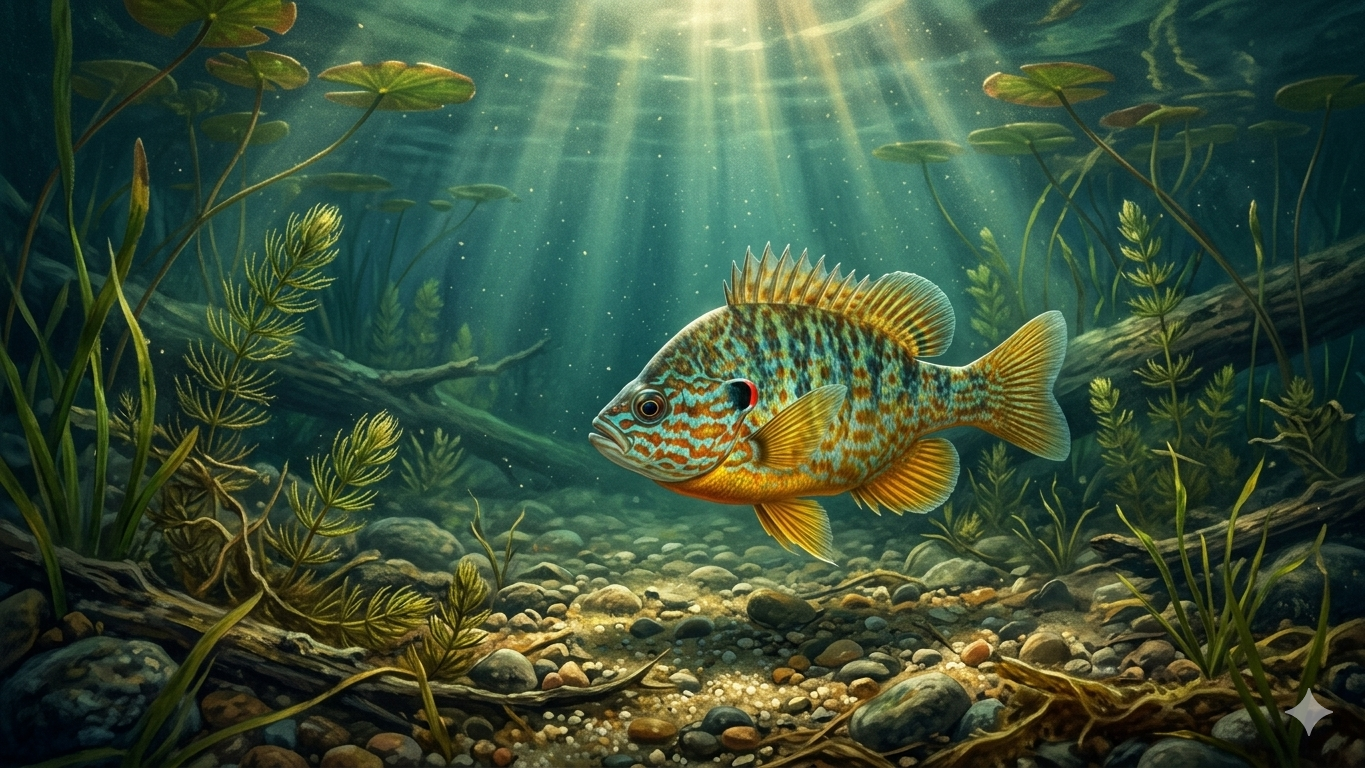
If you could frame a fish and hang it on a wall purely for its beauty, the pumpkinseed would be it. Electric blue cheek lines, a fiery orange-red ear flap spot, olive and gold body with iridescent flecks — they look hand-painted. Found in clear ponds and lakes across the Northeast and Midwest, pumpkinseeds are the classic "first fish" for generations of anglers. They're small but stunning, cooperative, and endlessly fun on ultralight gear.
Habitat
Clear, weedy ponds, lake margins, and slow rivers. Pumpkinseeds prefer cleaner, more vegetated water than green sunfish and share habitat with bluegill. They're commonly found near docks, weed beds, lily pads, and overhanging trees. More of a northeastern and midwestern species — less common in the deep South.
Feeding Behavior
Insects, snails, small crustaceans, and worms. Pumpkinseeds have small mouths and feed on smaller prey than bluegill. They pick food delicately — bites on the bobber are often subtle taps rather than dramatic pulls. Small hooks (#8–#12) and thin worms or waxworms are the standard approach.
Spawning
Spawn in late spring to early summer at 65–72°F. Males build visible nests on sandy bottoms in 1–4 feet of clear water. The nests look like light-colored circles on the bottom and are easy to sight-fish with polarized sunglasses. Males display brilliant spawning colors.
Seasonal Patterns
Spring
Moving to spawning areas. Visible nests in clear shallow water. Easy sight fishing.
Summer
Active near weed beds and docks. Feeding throughout the day in shaded areas.
Fall
Moving slightly deeper. Still responsive to worms and small jigs.
Winter
Deep and slow. Catchable through ice with tiny presentations.
Top Lures for Pumpkinseed
Best Techniques
Pro Tips
Use the smallest hooks you have — #8 to #12 — with a single thin red wiggler. Pumpkinseeds have small mouths and will often spit larger presentations.
Clear, calm water on a sunny morning is ideal. Wear polarized sunglasses and sight-fish visible pumpkinseeds near weed beds and docks.
A fly rod with small dry flies or wet flies is the ultimate pumpkinseed setup — they rise readily to surface insects in calm conditions.
Did You Know
Pumpkinseeds were introduced to Europe in the late 1800s as ornamental pond fish and have since established wild populations across western Europe. In some countries, they're now considered an invasive species — quite a journey for a little New England panfish.
Regulations Note
No specific regulations. Often grouped with other sunfish.
Plan Your Next Trip
Get Your Pumpkinseed Strike Plan
Enter your location and date — the Darkhorse Strike Plan pulls live weather, barometric pressure, and solunar data to give you exact lures and techniques for today.