Freshwater Species Guide
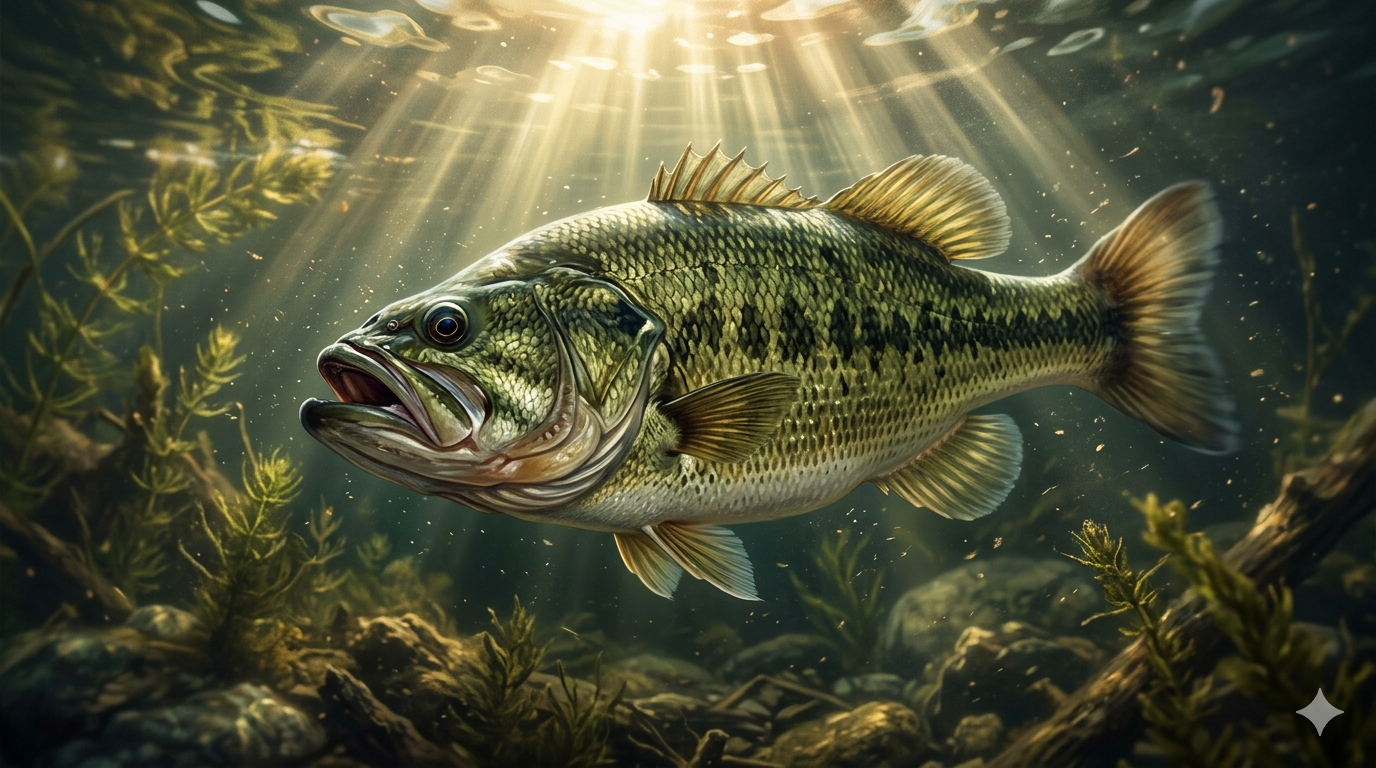
Largemouth Bass
Micropterus salmoides · Centrarchidae (Sunfish family)
At a Glance
Ideal Temp
60–80°F
Typical Weight
2–8 lbs
Record Weight
22 lbs 4 oz
Average Length
12–18 inches
Lifespan
10–16 years
Peak Activity
Dawn / Dusk
Skill Level
Beginner
Overview
The largemouth bass is the undisputed king of North American freshwater fishing. Aggressive, territorial, and found in almost every state — these fish are everywhere, which is exactly why they're the perfect starting point for any angler. They hit hard, they jump, and when a big one ambushes your lure from under a dock, you'll understand the obsession.
Habitat
Largemouth bass love structure — docks, fallen trees, weed edges, rocky points, and submerged vegetation. In lakes they sit at depth ranges of 1–20 feet depending on season and temp. In rivers they tuck into eddies and slow backwater pockets away from current.
Feeding Behavior
Opportunistic ambush predators. Primary diet: bluegill, shad, crawfish, frogs, and mice. They don't chase — they wait and explode. Water temp drives feeding intensity more than any other variable.
Spawning
Spawn when water hits 59–75°F, typically April–June depending on latitude. Males fan shallow nests (2–8 ft) in sandy or gravel substrate near cover. Big females move in, drop eggs, then leave. Males guard the nest aggressively — this is when they're most catchable.
Seasonal Patterns
Spring
Pre-spawn feeding frenzy then nest guarding. Most accessible big fish of the year.
Summer
Deep during midday heat. Topwater explosions at first and last light.
Fall
Aggressive pre-winter feeding. Following shad schools shallow. Underrated season.
Winter
Lethargic. Grouped in deep structure. Ultra-slow presentations only.
Top Lures for Largemouth Bass
Best Techniques
Pro Tips
Fish the shady side of structure — bass position relative to sun angle all day long.
After a cold front, downsize your lure and slow everything down. Wait 2–3 days for activity to pick back up.
Match your jig trailer color to the predominant crawfish color in the water you're fishing.
In clear water, longer casts prevent spooking fish. In murky water, get close to the cover.
Did You Know
Largemouth bass can inhale a lure in 1/100th of a second by expanding their mouth cavity to create a vacuum. That explosion you feel? Physics.
Regulations Note
Minimum size limits vary widely by state (typically 12–15 inches). Many waters have slot limits protecting large females. Always check your state DNR.
Plan Your Next Trip
Get Your Largemouth Bass Strike Plan
Enter your location and date — the Darkhorse Strike Plan pulls live weather, barometric pressure, and solunar data to give you exact lures and techniques for today.