Freshwater Species Guide
Freshwater Drum
Aplodinotus grunniens · Sciaenidae
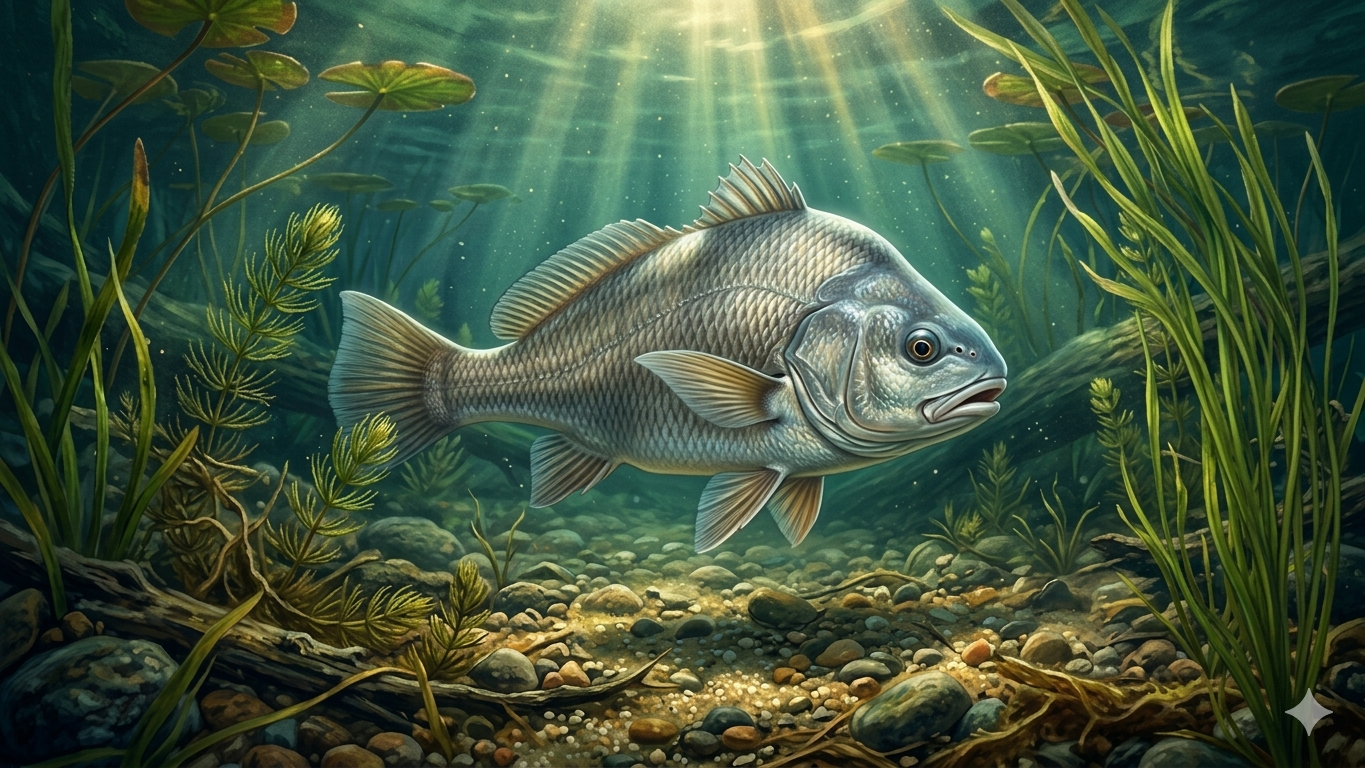
At a Glance
Ideal Temp
65–80°F
Typical Weight
2–10 lbs
Record Weight
54 lbs 8 oz
Average Length
14–24 inches
Lifespan
10–15 years
Peak Activity
Evening
Skill Level
Beginner
Overview
The most common fish most anglers know nothing about. Freshwater drum are found in virtually every major river system in the eastern US — and most people who catch one have no idea what they've got. They make a distinctive drumming sound using specialized muscles against their swim bladder, fight respectably on medium tackle, and can grow past 50 lbs. They're the only North American freshwater member of the drum and croaker family that dominates saltwater fishing.
Habitat
Large rivers, reservoirs, and the lower reaches of major tributaries. Drum prefer deep, slow-moving water with sand or mud bottoms. They're bottom-oriented fish that feed along channel edges, deep flats, and in the slack water behind wing dams and current breaks. The Mississippi, Ohio, and Missouri river systems hold the highest concentrations.
Feeding Behavior
Bottom feeders that specialize in crushing mollusks with their powerful pharyngeal teeth. They eat freshwater mussels, snails, crawfish, and small fish. Nightcrawlers and crawfish are the most effective baits. They're most active in the evening and will hit jigs bounced along the bottom.
Spawning
Spawn in late spring and early summer at 65–70°F over open water. Drum are broadcast spawners — eggs and sperm are released into the water column where fertilization occurs. No nest building or parental care. Males produce their signature drumming sound during spawning to attract females.
Seasonal Patterns
Spring
Pre-spawn feeding along river channels and flats. Active on crawfish and worms.
Summer
Peak activity. Evening feeding runs along channel edges. Strong fighters in warm water.
Fall
Active feeding before winter. Moving to deeper channel areas.
Winter
Deep and slow. Grouped in deepest channel holes.
Top Lures for Freshwater Drum
Best Techniques
Pro Tips
Don't throw drum back in disgust — they're legitimate sport fish. A 10-lb drum on medium tackle will test your gear, and the fillets are edible when prepared properly (score and deep fry).
Fish the downstream side of wing dams in river systems. Drum stack in the slack water behind these structures, especially in the Mississippi and Missouri rivers.
Crawfish tails threaded on a #2 hook and fished on the bottom near rocky current breaks are one of the most consistent drum baits in river systems.
Did You Know
Freshwater drum produce their signature "drumming" sound by vibrating specialized muscles against their swim bladder. This is the same mechanism used by saltwater drum, croakers, and corvina. The sound can sometimes be heard above the water surface.
Regulations Note
Few regulations in most states. Often no bag or size limits.
Plan Your Next Trip
Get Your Freshwater Drum Strike Plan
Enter your location and date — the Darkhorse Strike Plan pulls live weather, barometric pressure, and solunar data to give you exact lures and techniques for today.