Freshwater Species Guide
Chain Pickerel
Esox niger · Esocidae
At a Glance
Ideal Temp
50–65°F
Typical Weight
1–3 lbs
Record Weight
9 lbs 6 oz
Average Length
14–24 inches
Lifespan
8–12 years
Peak Activity
Morning
Skill Level
Beginner
Overview
The pike family's northeastern representative. Chain pickerel are everything northern pike are — ambush predators with sharp teeth and explosive strikes — just in a smaller, more accessible package. They're the top predator in countless New England ponds and lakes where pike never established, and their distinctive chain-link pattern makes them one of the most beautiful esocids. On ice, they're one of the most popular tip-up species in the Northeast.
Habitat
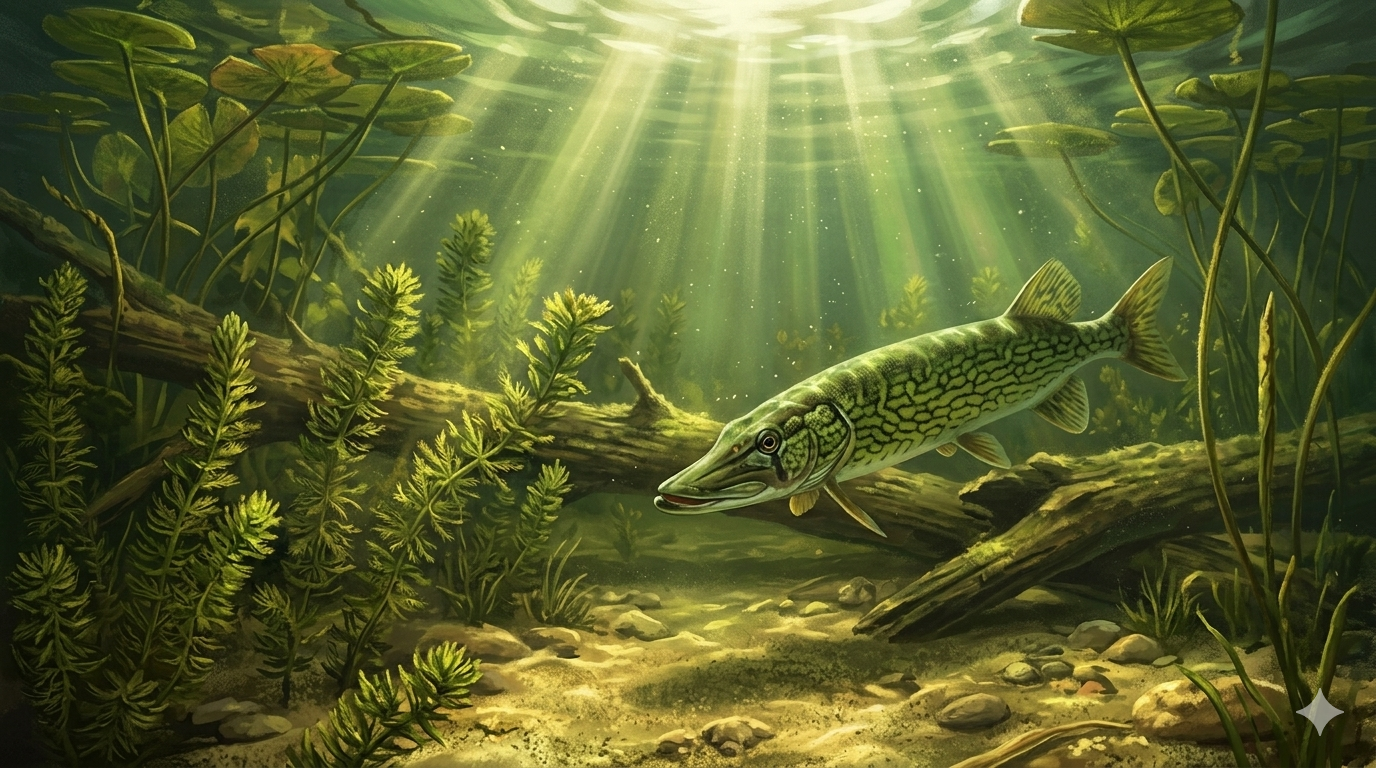
Weedy ponds, shallow lake bays, slow rivers, and bog-stained waters throughout the Northeast. Chain pickerel are ambush hunters that sit motionless in weed cover and explode on passing prey. Lily pad edges, submerged vegetation, and fallen timber are prime spots. They thrive in acidic, tannin-stained water that pike and muskie can't tolerate.
Feeding Behavior
Aggressive ambush predators. They eat fish, frogs, mice, crayfish, and large insects. Despite their relatively small size, pickerel attack prey that seems disproportionately large. Live shiners are the classic bait, especially through the ice. Small spoons, spinners, and jerkbaits trigger explosive reaction strikes.
Spawning
Very early spring spawners — often immediately after ice-out when water is still in the 40s°F. Spawn in shallow vegetated areas and flooded marshes. No nest building. One of the first fish to become active in spring in northeastern waters.
Seasonal Patterns
Spring
Post-spawn feeding frenzy. Shallow and aggressive in warming water. Best open-water fishing of the year.
Summer
Ambushing from weed cover. Active in morning and evening. Deeper during midday heat.
Fall
Aggressive feeding before winter. Following baitfish into shallower areas.
Winter
Active under ice — excellent tip-up species. Cruising weed flats hunting shiners.
Top Lures for Chain Pickerel
Best Techniques
Pro Tips
Use a short wire or heavy fluorocarbon leader — pickerel have sharp teeth that will slice through light monofilament. A 6-inch 15 lb fluorocarbon leader is a good compromise between bite protection and presentation.
On ice, set your tip-up shiner 1–2 feet above the weed tops. Pickerel cruise just above the vegetation hunting — putting the bait right in their patrol zone.
Weedless spoons are the ideal pickerel lure for open water — you can cast them directly into the thickest lily pad fields and weed mats where pickerel live without getting snagged.
Did You Know
Chain pickerel get their name from the distinctive gold chain-link pattern on their green flanks — a pattern unique among all pike family members. Despite being in the same family as muskellunge, chain pickerel rarely exceed 3 lbs, making them roughly 20 times smaller than their largest cousin.
Regulations Note
Check northeast state regulations for minimum size. Often 15-inch minimum.
Plan Your Next Trip
Get Your Chain Pickerel Strike Plan
Enter your location and date — the Darkhorse Strike Plan pulls live weather, barometric pressure, and solunar data to give you exact lures and techniques for today.