Freshwater Species Guide
Common Carp
Cyprinus carpio · Cyprinidae
At a Glance
Ideal Temp
65–80°F
Typical Weight
5–20 lbs
Record Weight
57 lbs 13 oz
Average Length
18–30 inches
Lifespan
20–50 years
Peak Activity
Morning / Evening
Skill Level
Intermediate
Overview
Call them trash fish if you want — carp anglers will smile and keep their spots to themselves. Common carp are pound-for-pound some of the most powerful freshwater fish you can catch on rod and reel. A 20-lb carp in current on light tackle is a legitimate 15-minute battle. European anglers have elevated carp fishing to a serious art form. North American anglers are starting to catch on — especially sight fishing carp on clear flats like "freshwater bonefish."
Habitat
Shallow weedy bays, river backwaters, muddy flats, and any warm-water body with significant aquatic vegetation. Carp are found virtually everywhere in North America. On clear, shallow flats they can be sight-fished like flats species — tailing and feeding carp pushing wakes through shin-deep water are some of the most exciting and technically demanding targets in freshwater fishing.
Feeding Behavior
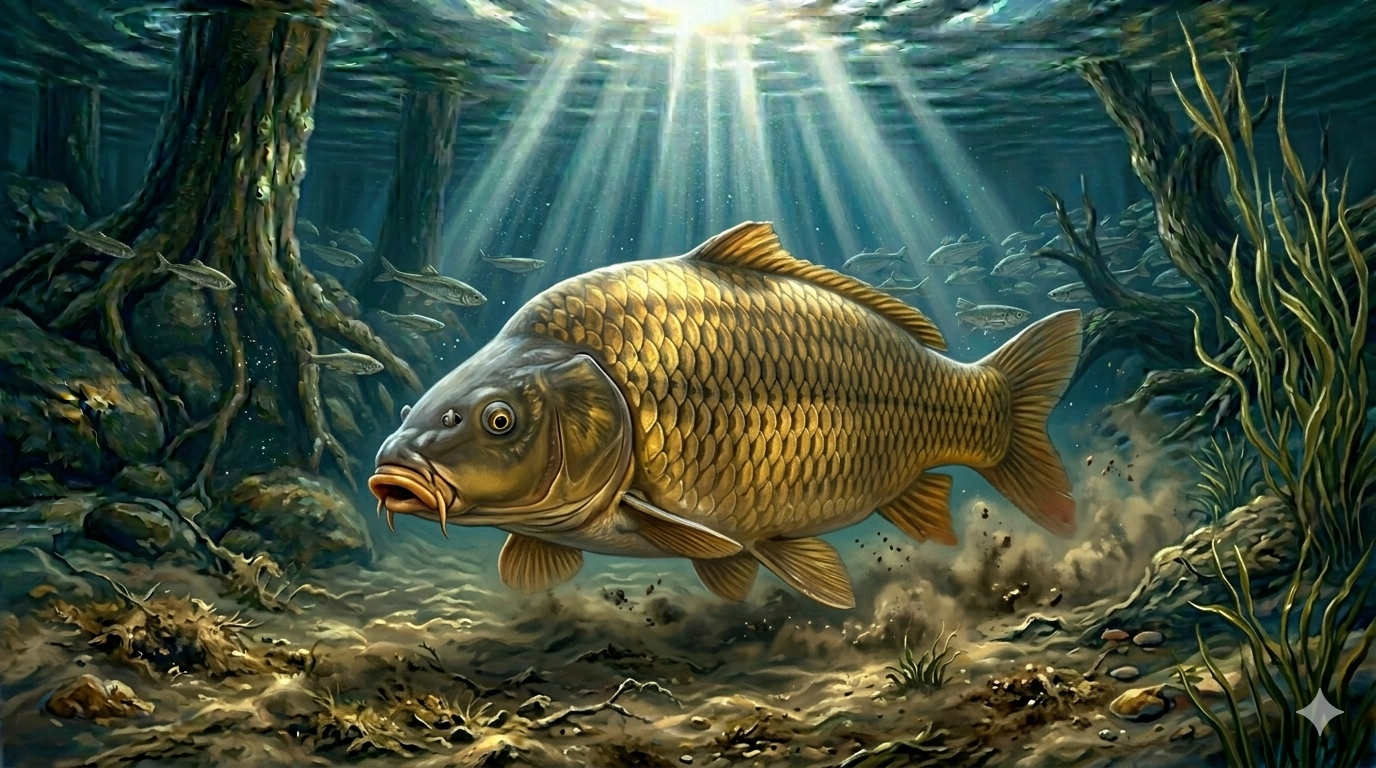
Bottom omnivores that root, suck, and filter food with remarkable efficiency. Corn, dough balls, boilies, and worms are the classic baits. On clear flats, presenting a single kernel of corn or a small fly to a feeding carp requires real precision — they'll refuse a poorly presented bait even when actively feeding. They use taste receptors in their barbels to inspect food before eating.
Spawning
Spawn in spring when water hits 62–68°F. Large groups of carp splash, thrash, and roll in spectacular mass spawning events visible from shore — often in shallow water near reeds or vegetation. Females can carry up to 2 million eggs and may spawn with multiple males simultaneously.
Seasonal Patterns
Spring
Pre-spawn feeding, then spawning spectacle. Fish move to shallows and become highly visible.
Summer
Peak carp season. Morning sight fishing on shallow flats — tailing carp are the target. Pre-bait spots for evening sessions.
Fall
Heavy pre-winter feeding. Carp are aggressively eating before temperatures drop. Pre-bait spots work excellently.
Winter
Nearly dormant in cold water. Small, slow presentations near bottom in warmest available water.
Top Lures for Common Carp
Best Techniques
Pro Tips
Sight fishing carp on clear flats is the most technical, skill-intensive form of warm-water fishing in North America. Approach downwind, cast 3–4 feet ahead of the fish, and wait.
Hair rigs changed carp fishing — the bait is mounted off the bend of the hook so fish inhale it naturally without feeling metal. Learn this presentation.
Pre-bait your spot the night before with corn or boilies. Carp return to areas where food was previously found — a pre-baited spot is dramatically more productive.
When sight fishing, watch the fish's body language. Slightly tilted down and tail fanning slowly means it's actively rooting. That fish will eat. A fish moving quickly is going somewhere, not feeding.
Did You Know
Common carp are among the world's most widely distributed freshwater fish, found on every continent except Antarctica. Introduced to North America from Europe in the 1800s as a food fish, they've now been in our waters long enough that some large specimens may be 40–50 years old.
Regulations Note
Few regulations in most states. Invasive in many waters.
Plan Your Next Trip
Get Your Common Carp Strike Plan
Enter your location and date — the Darkhorse Strike Plan pulls live weather, barometric pressure, and solunar data to give you exact lures and techniques for today.