Freshwater Species Guide
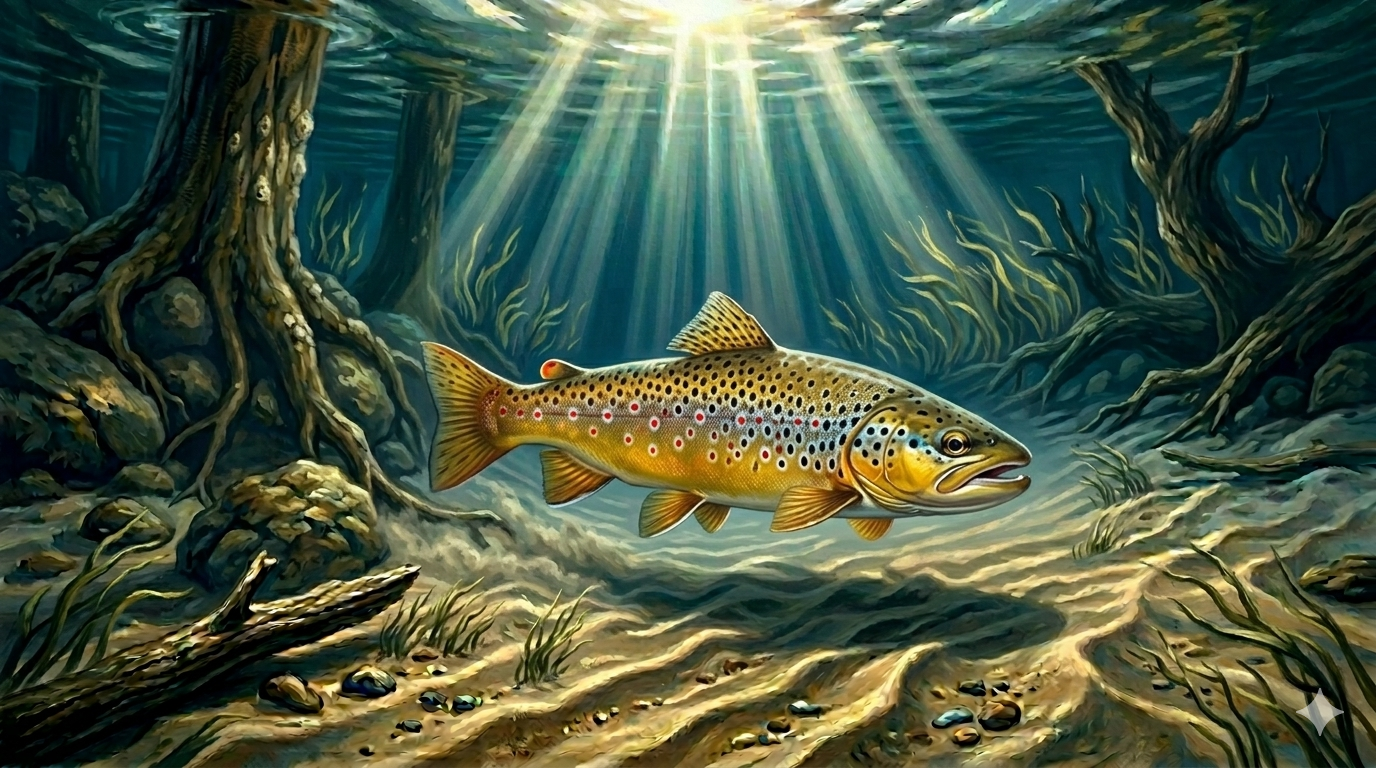
Brown Trout
Salmo trutta · Salmonidae
At a Glance
Ideal Temp
50–65°F
Typical Weight
1–6 lbs
Record Weight
41 lbs 8 oz
Average Length
12–22 inches
Lifespan
10–20 years
Peak Activity
Dawn / Dusk
Skill Level
Advanced
Overview
The chess player of trout. Brown trout are smarter, more suspicious, and harder to fool than any other trout species — which is exactly why dedicated trout anglers obsess over them. A big brown holding in an undercut bank will let a dozen bad presentations drift by before it commits. When you finally trick a 20-inch brown, you've earned every inch of it.
Habitat
Undercut banks, deep pools, and the seam where fast and slow water meet. In rivers, large browns claim prime lies and defend them for years. In lakes, they roam cold depths and relate to tributary mouths and rocky shoals. Brown trout tolerate slightly warmer water than rainbows, which is why they dominate many classic eastern streams.
Feeding Behavior
Opportunistic and highly selective. Aquatic insects are the staple diet, but large browns shift heavily to fish — especially after dark. Night fishing with large streamers or minnow plugs produces the biggest brown trout consistently. Daytime browns will key on hatch activity and inspect presentations with genuine skepticism.
Spawning
Fall spawners — water temps of 44–52°F, typically October–December. Make upstream runs to gravel tributaries. Males develop a pronounced hooked jaw (kype) and brilliant coloration. This is when rivers see their most concentrated brown trout and when night-fishing streamers becomes most productive.
Seasonal Patterns
Spring
Post-spawn recovery, then active feeding as water warms. Insect hatches begin driving surface activity.
Summer
Selective and technical during daytime. Evening dry fly hatches can trigger explosive surface activity.
Fall
Pre-spawn aggression peaks. Fish are territorial and hungry. Best streamer and large lure fishing of the year.
Winter
Lethargic. Hold in the deepest slowest pools. Small slow nymphs and eggs presented perfectly.
Top Lures for Brown Trout
Best Techniques
Pro Tips
The biggest browns feed at night. A large streamer or minnow plug fished after dark in a good pool will find fish that never show themselves in daylight.
Approach from downstream. Browns position facing current and will see you instantly if you wade carelessly upstream of their lie.
In clear, low-water summer conditions, switch to size 14–18 dry flies in the evening. Large brown trout rise consistently at dusk.
Brown trout are territorial — if you know where a big fish lives, it will be there tomorrow and next week. Pattern and persistence matter more than luck.
Did You Know
Brown trout aren't native to North America — they were imported from Germany and Scotland in 1883. They've since colonized cold-water streams in nearly every state and become the benchmark trout for technical fly fishing worldwide.
Regulations Note
Often catch-and-release only in premium stream fisheries.
Plan Your Next Trip
Get Your Brown Trout Strike Plan
Enter your location and date — the Darkhorse Strike Plan pulls live weather, barometric pressure, and solunar data to give you exact lures and techniques for today.