Freshwater Species Guide
Brook Trout
Salvelinus fontinalis · Salmonidae
At a Glance
Ideal Temp
45–60°F
Typical Weight
0.25–2 lbs
Record Weight
14 lbs 8 oz
Average Length
6–14 inches
Lifespan
5–7 years
Peak Activity
Morning
Skill Level
Intermediate
Overview
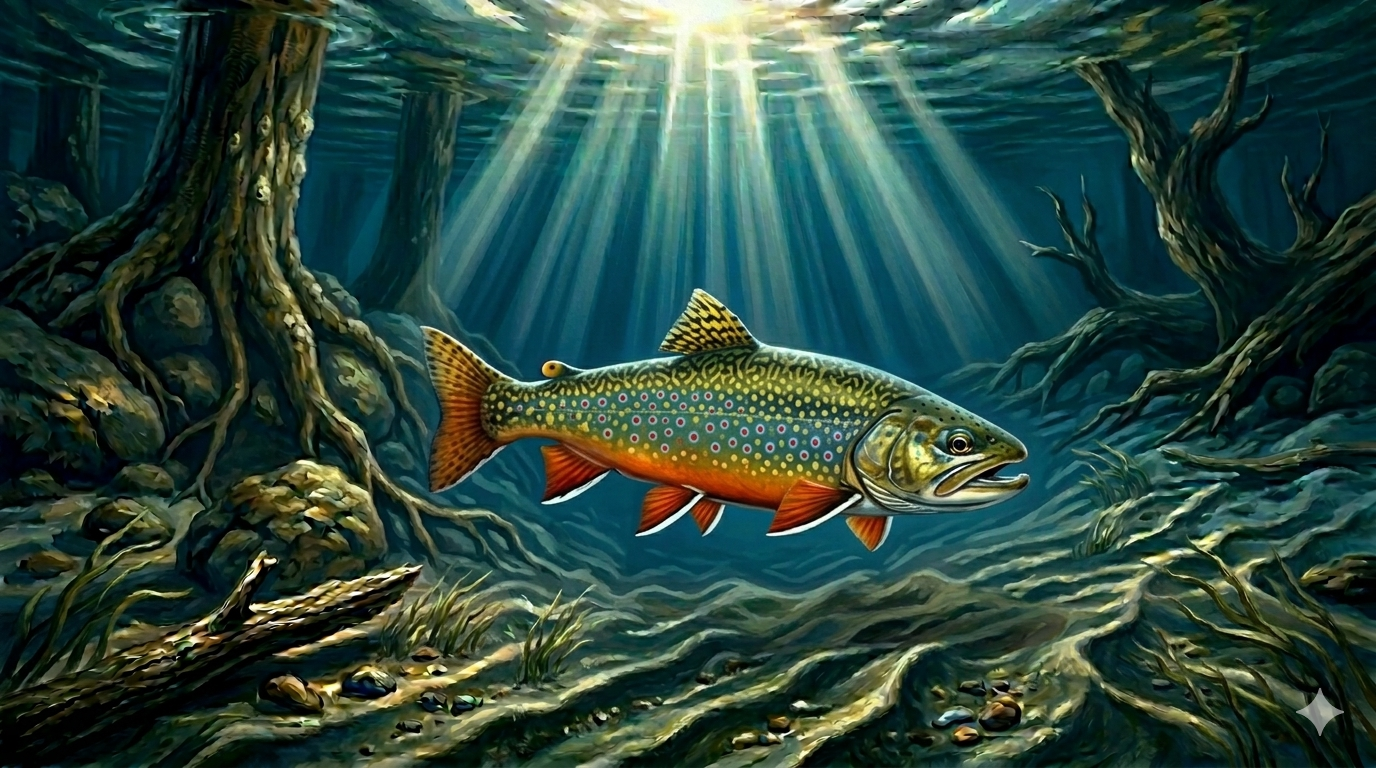
Ask any serious trout fisherman what their favorite fish is, and the honest ones say brook trout. They're the most strikingly beautiful freshwater fish in North America — dark green backs with red spots haloed in blue, bellies that turn fire orange in fall. And they live only in the coldest, cleanest streams. Finding brook trout means you've found somewhere genuinely wild.
Habitat
Ice-cold spring-fed streams, headwater tributaries, remote ponds, and alpine lakes. Brook trout are the most temperature-sensitive of all trout — water above 65°F stresses them quickly. Their presence is a direct indicator of pristine water quality. Found primarily in the northeastern US, upper Midwest, and throughout Canada.
Feeding Behavior
Generalist predators that eat aquatic insects, terrestrials, small fish, worms, and crayfish. Less selective than brown trout by a significant margin — if it looks edible and moves naturally, a brook trout will eat it. This accessibility makes them perfect for beginners learning to fly fish or anyone who just wants to catch fish in beautiful places.
Spawning
Fall spawners — October–November over clean gravel in cold, oxygenated water. Males develop intense, brilliant spawning colors with orange-red bellies that seem almost artificial. They need pristine gravel with good water flow for successful spawning, which is why native brookies are so sensitive to habitat degradation.
Seasonal Patterns
Spring
Active and feeding after winter. High water can concentrate fish in eddies and slower pockets.
Summer
Retreat to coldest available water. Spring seeps and shaded headwaters hold fish. Evening rises on larger streams.
Fall
Pre-spawn aggression. Males in brilliant spawning colors. Most accessible large fish of the year.
Winter
Slow but catchable in tailouts and deep pools. Tiny presentations required.
Top Lures for Brook Trout
Best Techniques
Pro Tips
Brook trout in tight streams require bow casts and roll casts to deliver flies or spinners under overhanging branches — master these before your trip.
Aggressive early morning, then under banks in direct sun by midday. Fish early or focus on shaded stretches when the sun hits the water.
In remote backcountry, brookies have often never seen artificial lures. Anything that hits the water and moves correctly will work — don't overthink the pattern.
Approach from downstream and kneel when you can. These fish live in clear, shallow water and spook easily at any movement.
Did You Know
Despite the name, brook trout are technically char — more closely related to lake trout and arctic char than to rainbow or brown trout. Their closest relative in North America is actually the bull trout of the Pacific Northwest.
Regulations Note
Native brook trout populations are sensitive — catch and release recommended.
Plan Your Next Trip
Get Your Brook Trout Strike Plan
Enter your location and date — the Darkhorse Strike Plan pulls live weather, barometric pressure, and solunar data to give you exact lures and techniques for today.