Freshwater Species Guide
Bowfin
Amia calva · Amiidae
At a Glance
Ideal Temp
65–85°F
Typical Weight
2–8 lbs
Record Weight
21 lbs 8 oz
Average Length
18–26 inches
Lifespan
10–30 years
Peak Activity
Morning / Night
Skill Level
Beginner
Overview
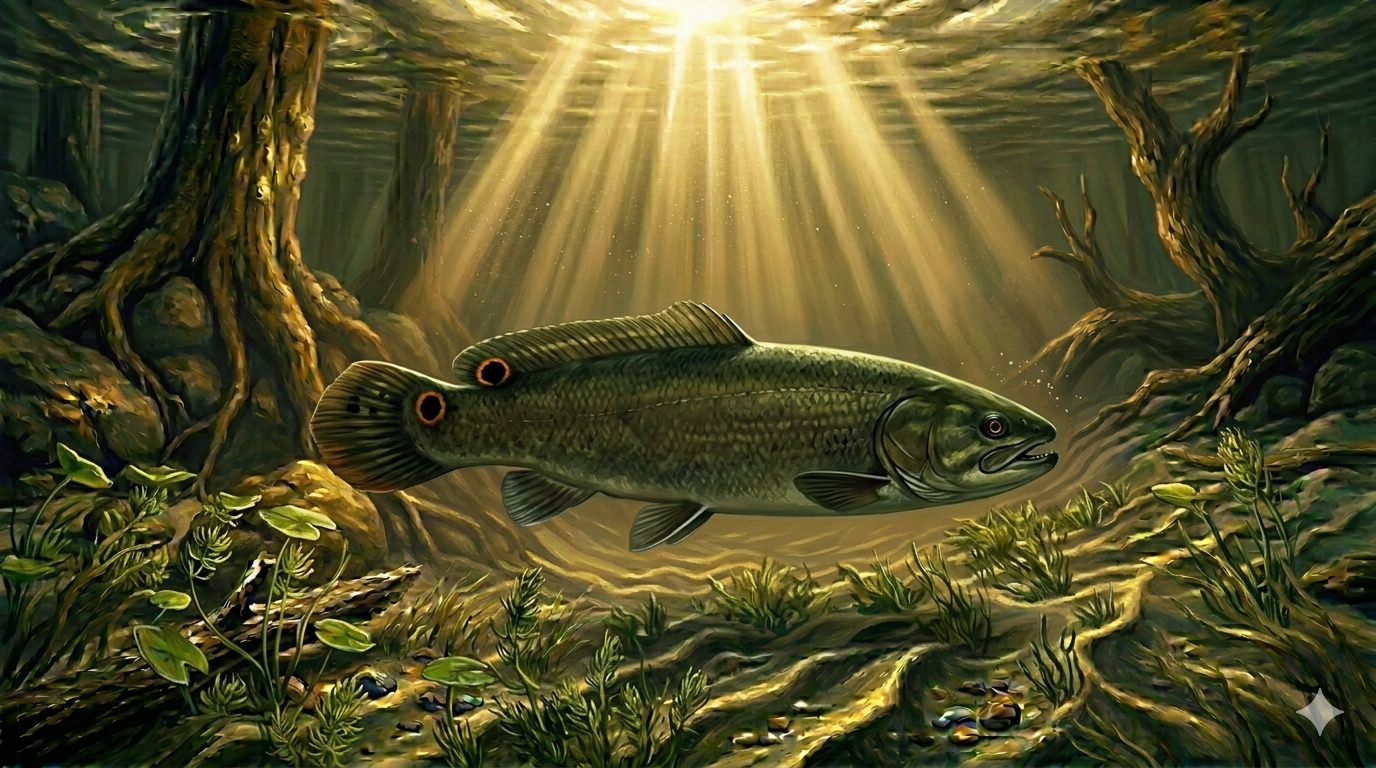
A living fossil. Bowfin are the last surviving member of an ancient fish family that swam alongside dinosaurs 150 million years ago. They look prehistoric because they are prehistoric — armored heads, long undulating dorsal fins, and the ability to breathe atmospheric air using a specialized swim bladder. They fight with insane ferocity, stripping drag and thrashing at the surface. Anglers who dismiss bowfin as "trash fish" have never hooked one.
Habitat
Swamps, backwaters, bayous, oxbow lakes, and slow-moving rivers with heavy vegetation. Bowfin are native to the eastern US from the Great Lakes south to the Gulf Coast. They thrive in warm, low-oxygen water thanks to their ability to gulp air at the surface. Dense cover — cypress roots, lily pad fields, and submerged timber — is their domain.
Feeding Behavior
Voracious predators that eat fish, crawfish, frogs, snakes, and essentially anything that fits in their powerful jaws. Bowfin have strong, bony jaws lined with sharp teeth. They ambush prey from cover and also actively hunt in shallow water at night. Topwater lures, spinnerbaits, and live bait all produce aggressive strikes.
Spawning
Spawn in spring when water reaches 61–66°F. Males clear circular nests in shallow, vegetated areas. Males are smaller than females and develop a distinctive bright green lower fin during spawning season. Males guard eggs and escort schools of jet-black fry for weeks — one of the most dedicated parental behaviors in freshwater fishing.
Seasonal Patterns
Spring
Spawning and aggressive feeding. Males guarding nests are extremely territorial and will attack any lure.
Summer
Peak activity. Feeding aggressively in shallow cover. Often seen gulping air at the surface.
Fall
Active feeding before winter cooldown. Moving to slightly deeper cover.
Winter
Slow and deep. Can survive in very cold water by reducing metabolism dramatically.
Top Lures for Bowfin
Best Techniques
Pro Tips
Bowfin are among the hardest-fighting fish pound-for-pound in freshwater. Use medium-heavy tackle — they will destroy ultralight gear. 20 lb braid is not overkill.
Look for bowfin gulping air at the surface in warm, shallow water. When you see the distinctive roll, cast past the fish and retrieve through its zone.
Handle with extreme care — their teeth are sharp and they thrash violently. Lip grips or heavy gloves are recommended. Keep hands away from the jaws.
Bowfin are native to the eastern US and play an important ecological role as apex predators in swamp ecosystems. Don't kill them — release them.
Did You Know
Bowfin are the sole surviving species of an ancient fish order that dominated the world's waters during the Jurassic period. Their closest living relatives went extinct millions of years ago, making them one of the most biologically significant fish you can catch on rod and reel.
Regulations Note
Few regulations in most states. Native species — release recommended despite "trash fish" reputation.
Plan Your Next Trip
Get Your Bowfin Strike Plan
Enter your location and date — the Darkhorse Strike Plan pulls live weather, barometric pressure, and solunar data to give you exact lures and techniques for today.