Freshwater Species Guide
Black Bullhead
Ameiurus melas · Ictaluridae
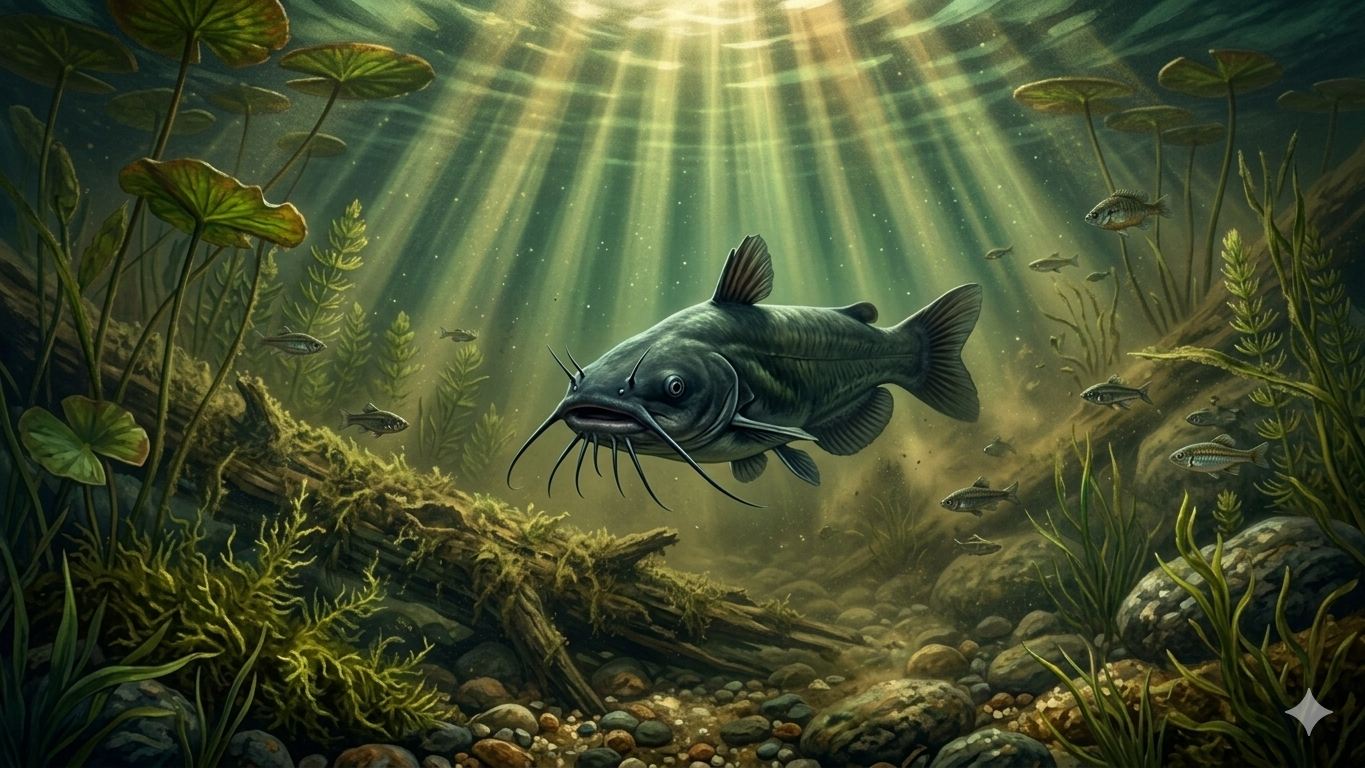
At a Glance
Ideal Temp
65–82°F
Typical Weight
0.5–2 lbs
Record Weight
8 lbs 15 oz
Average Length
8–14 inches
Lifespan
7–9 years
Peak Activity
Night
Skill Level
Beginner
Overview
The farm pond catfish. Black bullheads are the catfish you're most likely to encounter in small ponds, suburban lakes, and slow streams across the Midwest. They're small compared to channel, flathead, and blue catfish — but they make up for it with sheer availability and willingness to bite. A warm summer evening, a worm on the bottom, and a bucket of bullheads for the fry pan is one of American fishing's simplest and most satisfying traditions.
Habitat
Farm ponds, small lakes, muddy creeks, and slow-moving rivers with soft bottoms. Bullheads are extraordinarily tolerant of poor water quality — they thrive in warm, murky, low-oxygen water that would kill most other fish. If a small body of water has any fish in it at all, there's a good chance bullheads are in there.
Feeding Behavior
Scavengers and bottom feeders. Worms, dead insects, decomposing organic matter, small crayfish, and just about anything edible on the bottom. They find food primarily by smell and taste using their sensitive barbels. Nightcrawlers, chicken liver, and dough bait are the classic presentations.
Spawning
Spawn in late spring at 66–70°F. Both parents participate in nest preparation, fanning out a depression in soft substrate near cover. Both parents guard the school of black fry — bullhead "balls" of tiny fish are a common sight in ponds in early summer.
Seasonal Patterns
Spring
Moving shallow for spawning. Active bottom feeding in warming water.
Summer
Peak activity, especially at night. Bottom feeding in warm, shallow water after dark.
Fall
Active feeding before winter dormancy. Evening and night bites strongest.
Winter
Nearly dormant in cold water. Not a realistic target.
Top Lures for Black Bullhead
Best Techniques
Pro Tips
Night fishing in summer is by far the most productive. Set out 2–3 rods with worms on bottom rigs along the bank of a farm pond after sunset and the action can be constant.
Bullhead spines are sharp and mildly venomous — they can deliver a painful puncture. Grip them from behind the head with your hand wrapped around the body behind the pectoral spines.
For eating, skin bullheads immediately and soak the fillets in saltwater or milk for 30 minutes before frying. This removes any muddy flavor from the meat.
Did You Know
Black bullheads can survive in conditions that would kill almost any other fish — water temperatures up to 95°F, dissolved oxygen levels near zero, and heavily polluted water. They can even survive being frozen into ice and revive when thawed.
Regulations Note
No specific regulations in most states. Often no bag or size limits.
Plan Your Next Trip
Get Your Black Bullhead Strike Plan
Enter your location and date — the Darkhorse Strike Plan pulls live weather, barometric pressure, and solunar data to give you exact lures and techniques for today.