Freshwater Species Guide
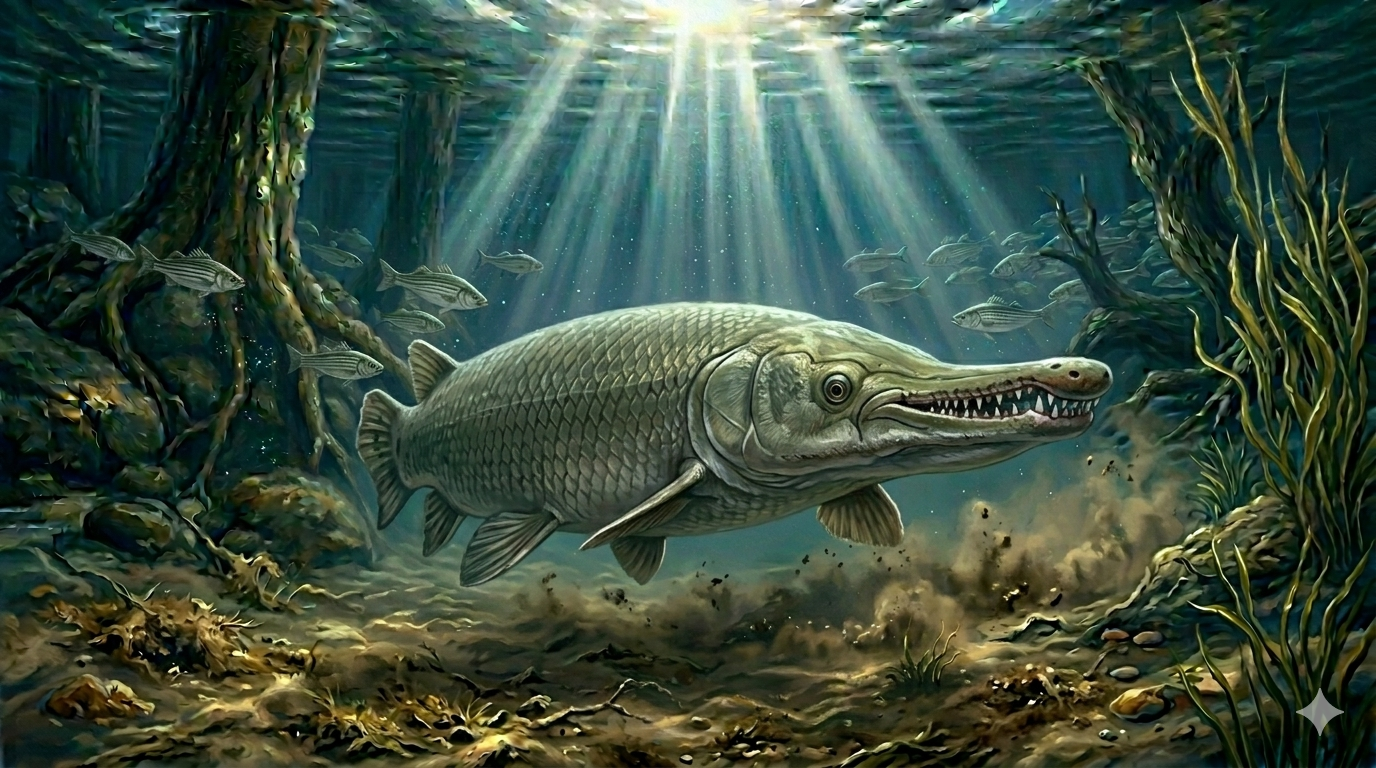
Alligator Gar
Atractosteus spatula · Lepisosteidae
At a Glance
Ideal Temp
65–90°F
Typical Weight
50–200 lbs
Record Weight
327 lbs
Average Length
48–84 inches
Lifespan
50–75 years
Peak Activity
Morning
Skill Level
Advanced
Overview
A living dinosaur. Alligator gar have been swimming North American rivers for 100 million years — they predate the extinction of the T-Rex. These are the largest exclusively freshwater fish in North America, with confirmed specimens over 300 lbs and 8 feet long. They surface to gulp air like a primordial submarine, and hooking one on rod and reel is a genuine battle against a fish that does not tire easily. If you want a bucket-list freshwater experience, there is nothing else like it.
Habitat
Large, slow-moving rivers, bayous, oxbow lakes, and backwater reservoirs throughout the Deep South. The Trinity River in Texas, lower Mississippi system, and Louisiana bayous are the epicenter. They prefer warm, sluggish water with access to shallow floodplains for spawning. Find them near log jams, river bends, and anywhere large fish can hold in slow current with overhead cover.
Feeding Behavior
Ambush predators that eat virtually anything they can catch — carp, buffalo, gar, drum, and even waterfowl. They lie motionless near the surface or lurking in timber, then strike with a violent sideways headshake. Their bony mouth makes hooksets extremely difficult with conventional lures, which is why the rope lure was invented specifically for gar fishing.
Spawning
Spawn in spring when water temperatures hit 68–82°F, typically during flood events when rivers spill onto floodplains. Females release eggs over submerged vegetation in shallow flooded areas. The eggs are toxic to mammals. Successful spawning requires seasonal flooding, which is why dam construction has hurt gar populations significantly.
Seasonal Patterns
Spring
Spawning season and peak activity. Fish move to shallow backwaters and floodplains. Most accessible time of year.
Summer
Active and feeding in warm water. Surface regularly to breathe. Morning surface activity is best window.
Fall
Still active but less surface rolling. Move to deeper river bends and timber structure.
Winter
Sluggish and deep. Rarely surface. Not a productive fishing season for gar.
Top Lures for Alligator Gar
Best Techniques
Pro Tips
The rope lure is the single most effective gar-specific presentation ever invented. Nylon rope frayed into a tangled ball catches in the gar's teeth — no hook required. Learn to tie one before your trip.
When a gar takes a conventional bait, wait. Count to 30 or even 60 before setting the hook. Their bony mouth is nearly impossible to penetrate on a quick hookset — they need time to turn the bait.
Target rolling fish in the morning. Alligator gar surface to gulp air regularly, and the visual pattern of rises tells you exactly where to cast. Position upwind and cast ahead of the roll.
Use 80–130 lb braided line and a steel leader. These fish are armored in ganoid scales that will cut lighter line instantly. A 7-foot heavy-action rod with a conventional reel is the standard setup.
Did You Know
Alligator gar are one of the oldest living species on Earth — their lineage dates back 100 million years to the Cretaceous period. They can breathe air using a specialized swim bladder, survive in brackish water, and their eggs are poisonous. They are a true living fossil and increasingly recognized as a critical apex predator in southern river ecosystems.
Regulations Note
Heavily regulated. Many states protect them as threatened. Texas requires a special stamp. Check local rules carefully.
Plan Your Next Trip
Get Your Alligator Gar Strike Plan
Enter your location and date — the Darkhorse Strike Plan pulls live weather, barometric pressure, and solunar data to give you exact lures and techniques for today.